Human-computer interaction research · Completed PhD project
Characterising the Digital Planetarium as a Teaching and Learning Space
A Grounded Theory investigation of how university students engage with a digital planetarium, what shapes the learning environment and how those findings can inform curriculum design.
- Status
- Completed
- Dates
- PhD project · 2018 - 2023
- Institution
- University of Cape Town
- Research setting
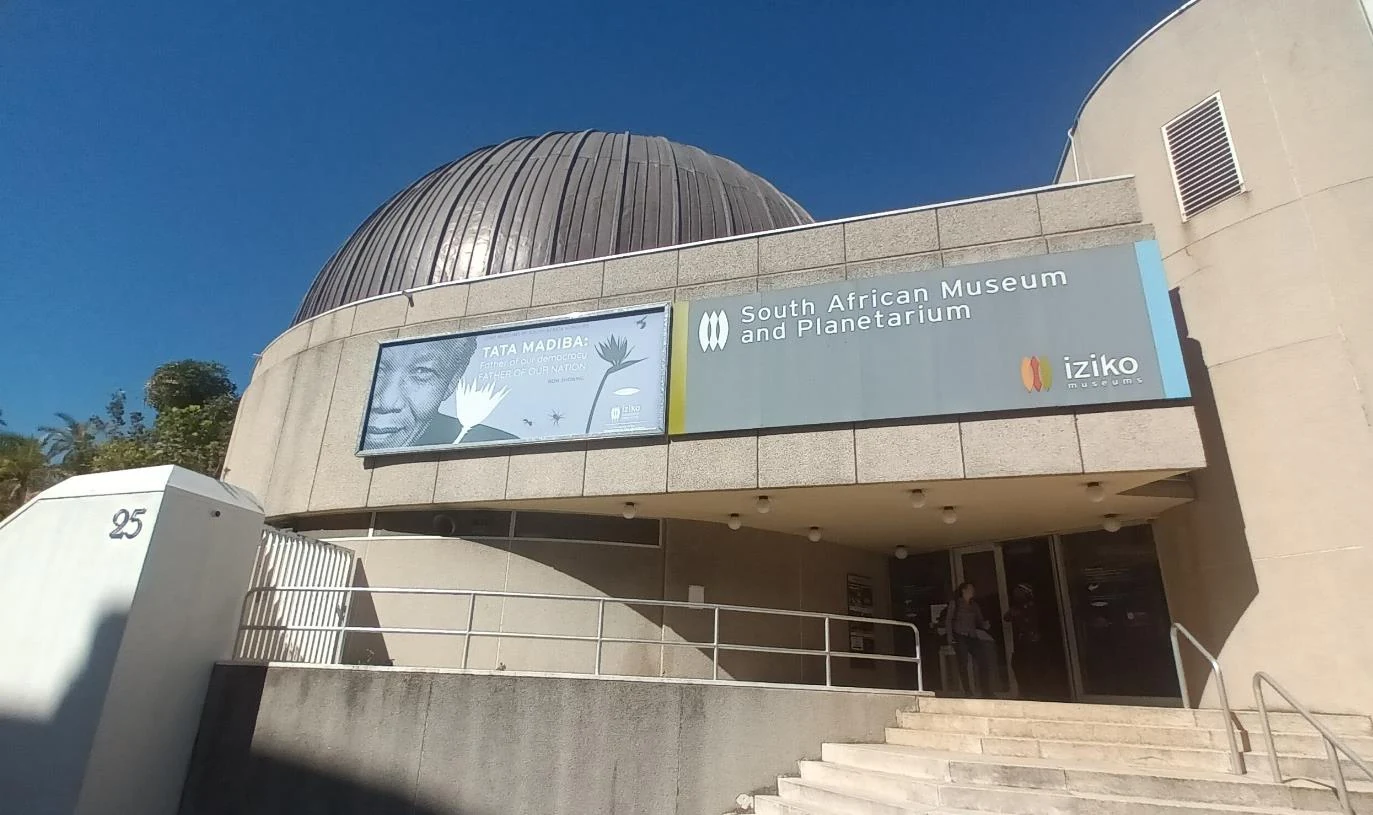
- Iziko Planetarium & Digital Dome
- Role
- Doctoral researcher and planetarium show designer
Overview
Studying the dome as a complete learning environment.
Digital planetariums can present the night sky, virtual journeys and scientific data across a hemispherical display. Those capabilities create teaching opportunities that are difficult to reproduce on a classroom screen, but they also introduce a dense mixture of visual, social, environmental and instructional influences.
Rather than asking only whether a planetarium is more effective than another medium, my doctoral work examined the teaching and learning space itself. The study followed university students during two visits to the Iziko Planetarium & Digital Dome that formed part of an introductory astronomy course at the University of Cape Town.
Student responses and detailed observations were analysed using the Constructivist Grounded Theory Method. The resulting models connect what students attend to, the contextual factors surrounding an immersive lesson and the decisions an instructor makes when incorporating a planetarium into a curriculum.
Research questions
Two enquiries anchored the investigation.
How do students engage with a digital planetarium?
Written responses and experience ratings were used to examine what students attended to, what they recalled and what patterns emerged across each visit.
What shapes its teaching and learning space?
Observations of planning, presentation, software, the physical theatre and the wider visit were analysed to identify the factors that construct the experience around the student.
My role
Research design, show development and qualitative analysis.
I led the doctoral investigation from its broad exploratory phase through data collection, analysis and model development. The work combined astronomy education research with practical experience of designing content for an immersive digital dome.
- Developed the study design and student-response instruments with the UCT Physics & Astronomy Education Research group.
- Documented show planning, planetarium visits and an instructor interview as observational data, with ethics approval and anonymised participation procedures.
- Storyboarded, developed and presented the second student visit, including scripted camera movements and distance representations in DigitalSky-Dark Matter.
- Digitised and analysed questionnaire and observational data using NVivo, Python and iterative Grounded Theory coding.
- Developed the localised models and the Model for Curriculum Design in the Planetarium, then documented the work in the thesis and a peer-reviewed conference proceeding.
Approach
An iterative investigation shaped by what emerged.
Familiarise with the facility and frame the problem
Exploratory visits, background research and discussion with the research group established the digital planetarium as a complex setting rather than a single instructional tool.
Observe the first student visit
The course lecturer planned and presented the first show. I recorded the planning process, administered pre- and post-show questionnaires and documented how the visit unfolded.
Code early findings and refine the next phase
Initial coding highlighted instructional intent, environmental framing and the distinction between learning-related and novelty-related engagement. Those findings informed the second visit and its revised response instrument.
Design and run a focused second show
I created a two-segment demonstration of astronomical distance and scale, using the digital dome's virtual camera to compare different spatial representations of the same content.
Build and connect the emergent models
Student and observational data produced two localised models. Working Memory and Cognitive Load Theory were then used as theoretical supplements to connect them into MCDiP.
Study phases
Two visits with the same introductory astronomy cohort.
| Phase | Timing | Participants | Planetarium instruction | Data collected |
|---|---|---|---|---|
| SPV1 | Course week 2 | 94 | A lecturer-planned visit covering the night sky, celestial sphere and several related course topics. | Pre- and post-visit responses, experience ratings, observations and a follow-up instructor interview. |
| SPV2 | Course week 11 | 75 | A researcher-designed distance and scale show using two visual representations within the digital dome. | Written responses after each segment, enjoyment choices, content reflection and detailed observational notes. |
Planetarium show design
Representing astronomical distance from two perspectives.
The second visit focused on a single instructional intent: to give students a multi-perspective visualisation that improved their sense of scale for objects and distances encountered in introductory astronomy.
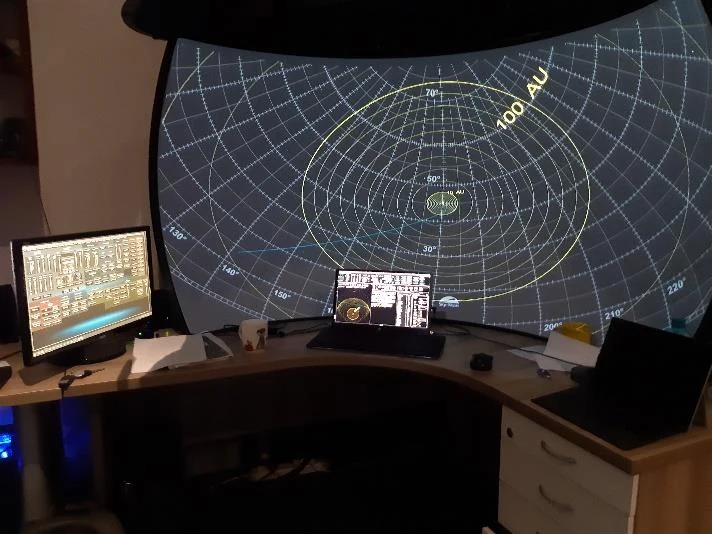
Relative-scale zoom
The virtual camera moved away from Earth perpendicular to the path between milestone objects. Concentric distance circles expanded by powers of ten, with the unit changing from familiar local scales to larger astronomical references.
Fly-through perspective
The camera travelled along the same path while remaining oriented towards Earth. Objects entered the dome from behind the audience and a numerical counter replaced the concentric distance grid.
Key findings
Engagement depends on more than immersion alone.
Spectrum of attentiveness
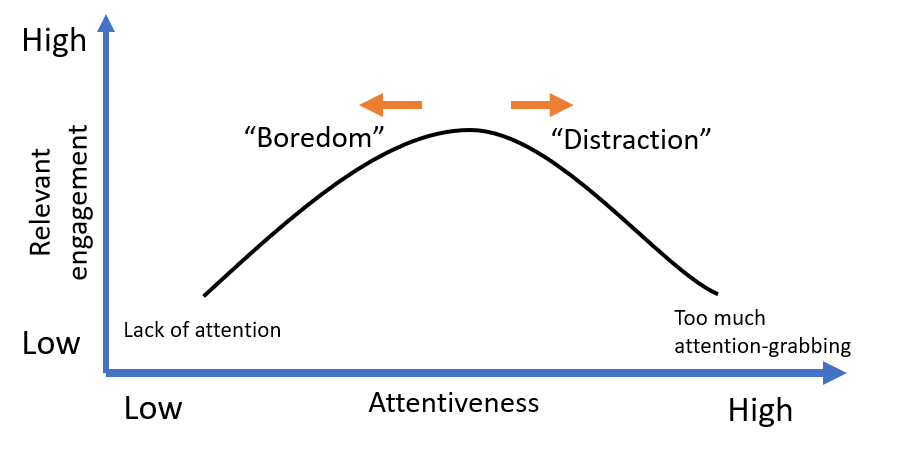
Student engagement suggested an intermediate range in which attention was sufficient and directed towards the intended content. Too little attention appeared as boredom; too many competing stimuli appeared as distraction.
Contextual influence
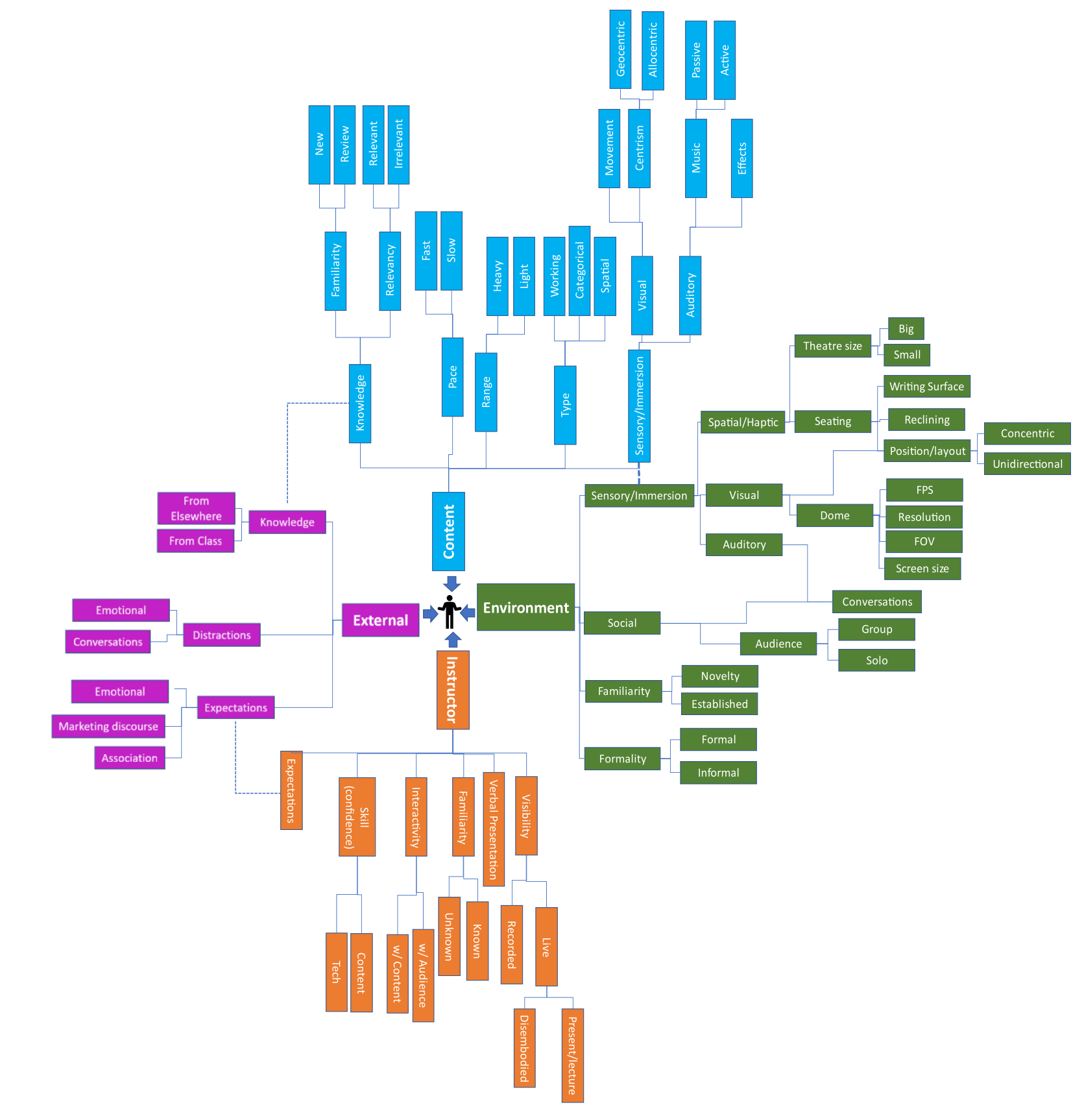
The planetarium experience was shaped by interacting aspects originating in the content, physical environment, instructor and external context. The dome was one part of a much larger teaching and learning system.
Curriculum-design model
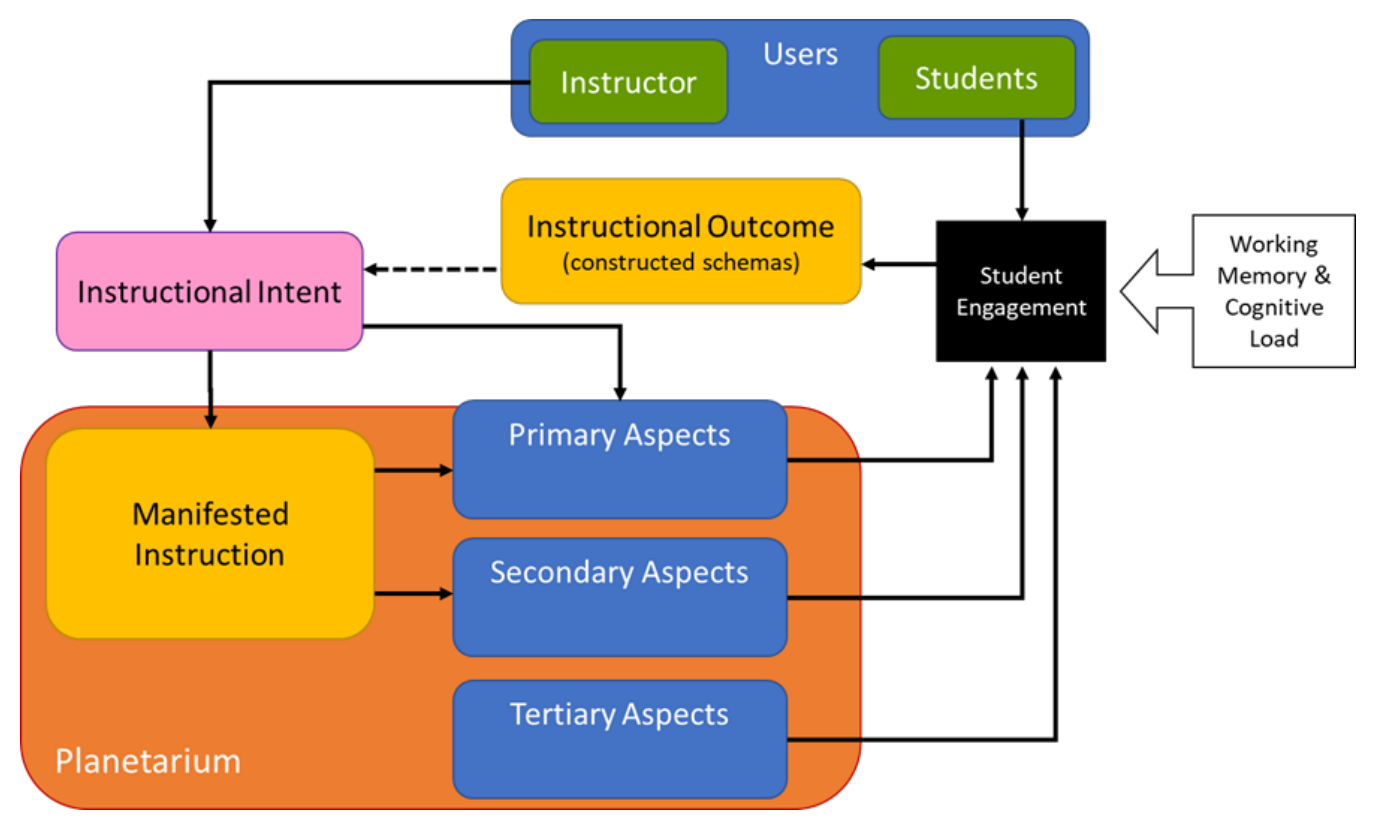
The two localised models were connected with Working Memory and Cognitive Load Theory to form MCDiP, a structured way to relate instructional intent, planetarium design choices and learning outcomes.
MCDiP in practice
Turning an instructional goal into design decisions.
MCDiP begins with the outcome an instructor wants students to construct. It then separates the planetarium experience into three classes of aspects so that the unique value of the dome is not confused with everything else that happens during a visit.
Primary aspects
The affordances that justify using the planetarium for a particular goal, such as the full dome or a virtual camera that can present spatial relationships unavailable on a flat screen.
Secondary aspects
Elements that are reasonably controlled by the instructor but are not the central reason for using the facility, including pacing, labels, music, seating and the sequence of a show.
Tertiary aspects
Conditions outside the instructor's reasonable control, such as the planetarium's location, room layout, available hardware, software constraints and other environmental interruptions.
Research figures
From student engagement to curriculum design.
Outcomes
A documented study and a framework for further testing.
Doctoral thesis
The completed thesis provides the full account of the research design, student visits, qualitative analysis, emergent models and implications for instruction in a digital planetarium.
Three connected models
The project produced a localised model of student engagement, a localised model of contextual influence and MCDiP as their theoretically supplemented synthesis.
Peer-reviewed dissemination
The student-engagement strand was presented in the 2023 Physics Education Research Conference proceedings, providing a concise account of the attentiveness result and its empirical basis.
Practical design language
The distinction between primary, secondary and tertiary aspects gives instructors a way to explain why a planetarium is being used, what can be deliberately shaped and what must be managed.
Limitations and future work
A basis for further research, not a universal recipe.
The empirical study was limited to one digital planetarium, one university astronomy course and one cohort followed across two visits. Its models are grounded in that formal educational context and should not be assumed to transfer unchanged to public shows, school outreach, other disciplines or different planetarium designs.
I therefore presented MCDiP as the basis for a formal grounded theory rather than a finished universal framework. Further work should test and refine it across additional cohorts, instructors, facilities and subjects; examine cognitive load more directly; and build shared evidence about which immersive affordances genuinely support particular instructional goals.
Collaboration
Research across education, astronomy and visualisation.
The PhD was carried out in the University of Cape Town Department of Astronomy under the supervision of Prof Saalih Allie, with Prof Thomas Jarrett and Dr Lucia Marchetti as co-supervisors. The UCT Physics & Astronomy Education Research group contributed to study administration, instrument refinement and collaborative analysis. Show development also drew on the IDIA/UCT Visualisation Laboratory, with the student visits conducted at the Iziko Planetarium & Digital Dome.
Resources